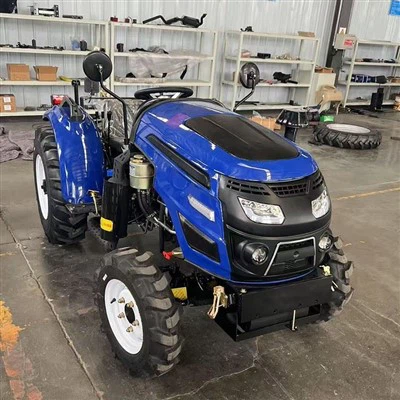
The 2025 agricultural machinery scrapping and replacement policy will see a major adjustment. Subsidies for scrapping old tractors will be further expanded and the subsidy standards significantly increased, providing strong impetus for upgrading agricultural production equipment. Recently, the Ministry of Agriculture and Rural Affairs, the National Development and Reform Commission, the Ministry of Finance, and the National Grain and Strategic Reserves Administration jointly issued the "Notice on the Implementation of the 2025 Agricultural Machinery Scrapping and Replacement Subsidy Policy." This notice clarified that, in addition to the existing nine types of agricultural machinery, field operation monitoring terminals and other equipment will be included in the scrapping and replacement subsidy scope. Subsidies for some key equipment will also be increased.
This policy adjustment has far-reaching implications for the tractor industry. The notice stipulates that scrapping rice transplanters and replacing them with new ones will result in a subsidy increase of no more than 50%. The maximum scrapping subsidy for scrapping and replacing cotton pickers will be increased from 60,000 yuan to 80,000 yuan per unit. The scrapping and replacement of agricultural equipment such as the Beidou assisted driving system and field operation monitoring terminals will also see a 50% increase in the scrapping subsidy. This measure will effectively reduce the cost for farmers and agricultural machinery cooperatives to upgrade tractors and other agricultural equipment, accelerating the withdrawal of old, high-energy-consuming tractors from the market.
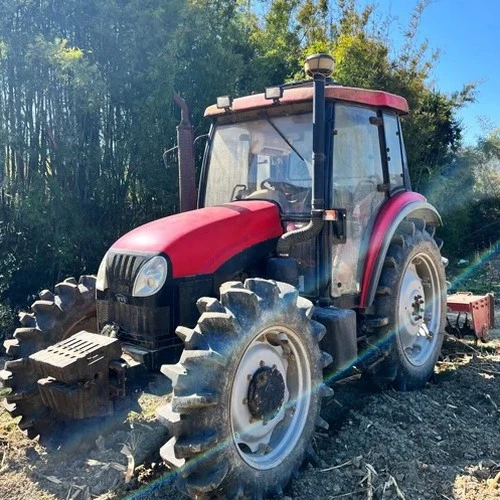
To ensure the policy's effective implementation, the notice requires provinces to effectively manage and utilize the ultra-long-term special treasury bond funds allocated to support the scrapping and replacement of agricultural machinery, strengthen the development of a recycling and dismantling system for scrapped agricultural machinery, and accelerate the development and deployment of recycling and dismantling enterprises. Furthermore, it encourages the separation of recycling and dismantling processes based on actual conditions, exploring new approaches to improve the efficiency of subsidy disbursement. To address the previous issues of fraudulent subsidies and misappropriation of subsidies, the notice explicitly calls for close scrutiny of key links, including equipment recovery, verification, scrapping and dismantling, and fund disbursement. Violations such as information falsification, misrepresenting smaller equipment as larger equipment, and scrapping the same machine in multiple locations will be severely punished to ensure efficient and standardized implementation of the policy.
According to officials from the Ministry of Agriculture and Rural Affairs, the adjustments and optimizations to the subsidy policy for scrapping old agricultural machinery will further accelerate the promotion and application of advanced, applicable, energy-saving, environmentally friendly, safe, and reliable tractors and other agricultural machinery, promote the transformation of agricultural mechanization towards high-quality development, and provide solid equipment support for ensuring national food security and the supply of important agricultural products. It is estimated that by 2025, more than 150,000 old tractors will be scrapped and replaced across the country, driving the upgrading of agricultural machinery and equipment and improving agricultural production efficiency.