Although August is still midsummer and the weather is scorching, preparations for autumn plowing have quietly begun in parts of my country. Autumn plowing is a crucial step in agricultural production. Through deep tillage, loosening the soil, and burying straw, it effectively improves soil structure, increases soil fertility, and eliminates pests and diseases, laying a solid foundation for the next crop season's planting and growth. This practice directly impacts the yield and quality of subsequent crops. Across the vast fields, tractors, pulling plowshares, rotary tillers, straw returners, and other agricultural implements, roar back and forth, playing a lively prelude to a bountiful harvest.
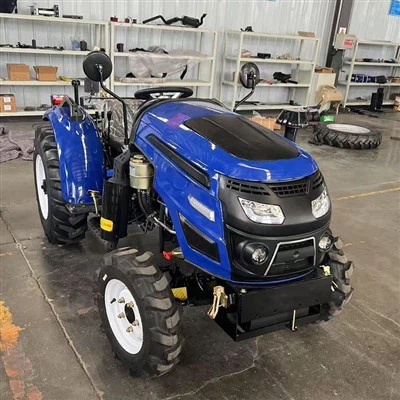
In autumn plowing operations, tractors are the undisputed "stars." Different tractor models perform different tasks depending on the specific conditions of the fields. In areas with severely compacted soil, tractors pull heavy plowshares to turn up the deep soil, breaking up the compacted layer and increasing its air and water permeability. In fields with abundant straw, tractors drive straw returners, which crush the remaining straw after harvest into fine powder. Rotary tillers then bury the crushed straw in the soil. Microorganisms in the soil decompose the straw, converting it into organic matter, increasing soil fertility and reducing the need for chemical fertilizers. A farmer, watching the busy tractors, said happily, "Autumn plowing used to rely on oxen pulling people to dig. It took several days to dig one acre of land, leaving us exhausted and back-tired, and the tillage wasn't deep or even. Now, with tractors, we can plow over 20 acres a day, plowing deeply and evenly, and we can return the straw directly to the fields. This saves money and improves the soil-it's so convenient."

To ensure the quality and efficiency of autumn plowing, agricultural machinery operators thoroughly inspect and adjust the tractor and implements before work, adjusting the tractor's operating parameters based on factors such as soil type, moisture content, and the amount of straw. For example, when working in heavy clay soil, they reduce the tractor's speed and increase the plowshare's penetration depth to ensure quality plowing. In areas with high soil moisture, they use wide-width rotary tillers to minimize damage to the soil structure. At the same time, agricultural machinery operators strictly adhere to agricultural technical requirements, ensuring that the tillage depth reaches 25-30 cm, the straw shred length does not exceed 10 cm, and the burial depth is at least 15 cm, ensuring that autumn plowing operations meet standards.
Agricultural machinery service stations across the country have also actively taken action to provide comprehensive service support for autumn plowing operations. As early as the end of July, agricultural machinery service stations organized technicians to visit rural areas to provide free inspections and maintenance for farmers' tractors, focusing on key components such as the engine, transmission, brake system, and suspension, and promptly replacing aging parts to ensure the tractors can operate normally during the autumn plowing season. Agricultural machinery service stations also maintain a sufficient supply of tractor filters, tires, plowshares, blades, and other vulnerable parts, and have established a 24-hour service hotline. If agricultural machinery operators encounter equipment failures during operations, technicians can arrive on-site to repair them as quickly as possible, minimizing operational interruptions.
In addition, agricultural technicians have been deeply involved in the fields, providing farmers with autumn plowing technical guidance. They explained in detail to farmers the optimal time, methods, and precautions for autumn plowing, guiding them to optimally arrange the sequence and methods of plowing based on their specific planting plans. For example, for plots planned for wheat planting, they recommended timely harrowing after plowing to conserve moisture and prevent soil loss. For fields planted with vegetables, they instructed farmers to apply organic fertilizer during autumn plowing to further improve soil fertility. Technicians also demonstrated the correct connection methods for tractors and various agricultural implements, helping operators master standard operating techniques and improve work quality.
Thanks to the assistance of tractors and the concerted efforts of all parties, autumn plowing operations are progressing smoothly across the country. By the end of August, over 40% of the work had been completed in some areas, and it is expected to be completed by mid-September. The orderly progress of autumn plowing has fully prepared for the planting and growth of the next crop season and has filled farmers with anticipation for a bountiful harvest.