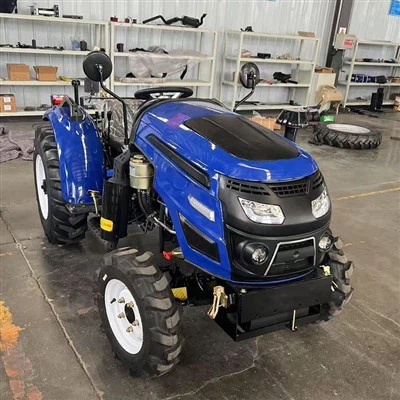
As essential agricultural equipment, tractors play a vital role in supporting agricultural development and improving production efficiency. However, as they age, some tractors are gradually becoming obsolete and obsolete. Due to long-term use, these tractors have severely aged and their performance has significantly declined. This not only reduces operating efficiency but also poses significant safety hazards. During road and field operations, these tractors are prone to accidents such as brake failure and steering malfunction, threatening the lives of operators and surrounding personnel. To effectively eliminate safety hazards associated with old tractors and ensure agricultural production and road traffic safety, in August, agricultural machinery management departments in many regions, in collaboration with relevant departments such as transportation and public security, implemented a multi-pronged approach to promote the zero-use tractor scrapping program, strengthening the safety of agricultural machinery.
To increase awareness and participation among agricultural machinery operators regarding tractor scrapping, local agricultural machinery management departments conducted extensive publicity through various channels. In rural areas, village radio broadcasts daily announcements about tractor scrapping policies. Promotional posters detailing the conditions, subsidy standards, and procedures for scrapping tractors are posted in crowded places like village committees, agricultural machinery service stations, and markets. Staff members also visit farms and the homes of agricultural machinery operators to distribute brochures one-on-one, answering questions about subsidy amounts and discounts on new equipment after scrapping. A staff member at an agricultural machinery management station stated, "Many agricultural machinery operators have an attachment to their old tractors and prefer not to scrap them if they still have some use. We patiently explain the safety and economic benefits to them, explaining that old tractors are not only prone to accidents but also expensive to repair, but that scrapping them can provide subsidies and discounts on new tractors, helping them understand the benefits of scrapping."

In addition to these promotional activities, local governments are also further streamlining tractor scrapping procedures to provide convenient and efficient services for agricultural machinery operators. Agricultural machinery management departments, in collaboration with qualified agricultural machinery recycling and dismantling companies, have established temporary scrapping centers in townships, providing a "one-stop" service. Farm machinery operators only need to bring their tractor's registration certificate, driving license, ID card, and other relevant documents to the processing point. Staff will verify the tractor's model, age, and technical condition on-site. Once confirmed as meeting scrap criteria, the recycling and dismantling company will dismantle the tractor on the spot and issue a recycling certificate. With the recycling certificate, the operator can apply for a scrapping subsidy directly at the processing point. The subsidy will be directly deposited into the operator's bank account within 15 working days after approval. The entire process only requires one visit, significantly saving operators time and effort.
In terms of law enforcement and supervision, local agricultural machinery management departments have strengthened coordination with traffic police departments and increased patrols on roads and farmland operation areas. Checkpoints have been set up on major rural roads and in areas where agricultural machinery operations are concentrated. Passing tractors are individually inspected, with a focus on tractors operating on the road or in operation without license plates or permits, those that have not undergone annual inspections, or those that have reached scrap standards but are still operating. For tractors identified as reaching scrap standards, law enforcement officers will explain relevant laws and regulations and safety hazards to the operators on the spot and order them to complete scrapping procedures within a specified timeframe. Those who refuse to comply will be subject to compulsory scrapping measures and dismantled. At the same time, a database of old tractors will be established, comprehensively surveying all tractors within the jurisdiction, detailing their age, technical condition, and owner information. This will enable dynamic management to ensure that every tractor reaching scrap standards is promptly identified and handled.
By the end of August, some regions had completed over 70% of the tractor scrapping targets set at the beginning of the year, scrapping over a thousand old tractors and effectively reducing agricultural machinery safety hazards. Moving forward, local governments will continue to intensify their efforts. For old tractors that have not yet been scrapped, they will implement on-site supervision and policy education to promote the orderly completion of scrapping and zero-scrapping efforts, effectively safeguard agricultural production and road traffic safety, and create a safe and stable environment for agricultural modernization.