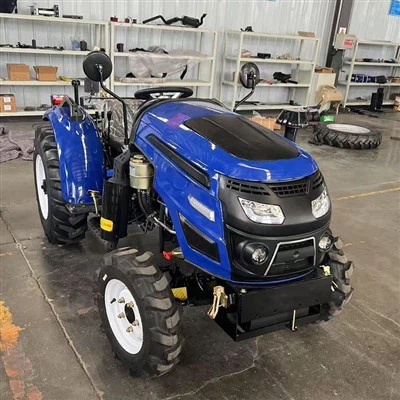
1. Daily Pre-Operation Checks
Before starting your tractor each day, conduct a quick visual inspection and check key components.
A. Fluid Level Checks
Engine Oil: Ensure oil is at the correct level using the dipstick. Top up if needed.
Coolant: Check the radiator and overflow tank to prevent overheating.
Fuel Level: Use clean fuel and drain any water from the fuel separator (if applicable).
Hydraulic Fluid: Ensure proper levels for smooth implement operation.
Transmission Fluid: Check for leaks and top up if necessary.
B. Tire Inspection
Check air pressure – Underinflated tires cause poor traction and higher fuel consumption.
Inspect for cuts, cracks, or embedded objects.
Ensure even wear – Uneven wear indicates alignment or weight distribution issues.
C. Battery Check
Inspect terminals for corrosion – Clean with baking soda and water if needed.
Check electrolyte levels (if not a maintenance-free battery).
Ensure tight cable connections for proper starting and charging.
D. Safety & Controls
Test brakes, clutch, and steering for responsiveness.
Ensure lights, turn signals, and beacons are working.
Check PTO shield and ROPS (Rollover Protective Structure) for safety.
2. Engine Maintenance
The engine is the heart of the tractor, and proper maintenance ensures fuel efficiency and longevity.
A. Oil & Filter Changes
Change engine oil and filters every 100-200 hours (refer to your owner's manual).
Use high-quality diesel engine oil with proper viscosity ratings.
Replace fuel filters regularly to prevent injector clogging.
B. Cooling System Maintenance
Flush and replace coolant every two years or as recommended.
Clean radiator fins and check for leaks.
Ensure the water pump and thermostat are functioning properly.
C. Air Filter Cleaning & Replacement
Inspect and clean the air filter daily in dusty environments.
Replace clogged air filters to prevent engine damage.
Ensure air intake hoses are securely attached.
3. Transmission & Drivetrain Maintenance
A well-maintained transmission and drivetrain ensures smooth operation and long service life.
A. Transmission Fluid & Filters
Check and replace transmission oil at manufacturer-recommended intervals.
Inspect for leaks and abnormal noises when shifting gears.
B. Clutch Maintenance
Adjust clutch pedal free play to avoid slippage or excessive wear.
Keep the clutch housing clean and free of debris.
C. Axles & Differential Care
Check gear oil levels and replace as needed.
Ensure differential lock engages and disengages properly.
Inspect seals for leaks.
4. Hydraulic System Maintenance
The hydraulic system powers loaders, three-point hitches, and external implements.
A. Fluid & Filter Checks
Check hydraulic fluid levels regularly.
Replace hydraulic filters every 200-400 hours.
Bleed air from the hydraulic system if performance drops.
B. Hose & Fitting Inspections
Look for leaks, cracks, or loose connections.
Replace worn hoses immediately to prevent failures.
C. Hydraulic Pump & Cylinder Care
Ensure smooth operation of the pump and hydraulic cylinders.
Lubricate moving parts as recommended.

5. PTO & Implement Maintenance
The Power Take-Off (PTO) system drives implements like mowers, balers, and augers.
A. PTO Shaft Inspection
Ensure the PTO shaft is properly greased to prevent wear.
Check for damaged or missing PTO shields for safety.
B. Three-Point Hitch Maintenance
Lubricate hitch linkage points to prevent rust and stiffness.
Check for worn or loose pins and bushings.
C. Implement Connection Check
Ensure proper attachment and secure locking of implements.
Adjust top link and stabilizers for proper operation.
6. Electrical System Maintenance
The electrical system powers lights, sensors, ignition, and electronic controls.
A. Battery Maintenance
Clean battery terminals to prevent corrosion.
Ensure tight connections and secure battery mounting.
Check alternator and voltage regulator output.
B. Lighting & Wiring Inspection
Replace faulty lights and fuses immediately.
Check for damaged or loose wiring connections.
C. Starter & Ignition System
Test the starter motor and ignition switch.
Replace worn-out glow plugs in diesel engines for cold starts.
7. Seasonal Tractor Maintenance
A. Pre-Winter Maintenance
Store in a dry place or use a weatherproof cover.
Drain water from fuel and add winter diesel additive.
Check battery charge and remove if storing long-term.
Ensure the antifreeze concentration is correct to prevent freezing.
Lubricate all moving parts before long-term storage to prevent rust.
B. Spring Preparation
Inspect for rodent damage on wiring and hoses.
Change fluids and lubricate moving parts.
Test all implements before field use.
Ensure all hydraulic fittings and cylinders are leak-free.
Check and adjust tire pressure before fieldwork begins.