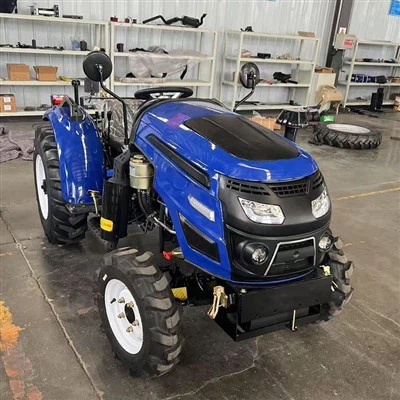
1. Tractor Load and Workload
The load on the tractor significantly affects fuel consumption. Operating the tractor near its optimal load range ensures efficiency, while overloading or underloading leads to fuel wastage.
How it impacts fuel consumption?
Overloading: Increases engine strain, leading to higher fuel usage.
Underloading: Reduces engine efficiency as fuel is burned without fully utilizing power output.
How to manage it?
Match tractor size and horsepower (HP) to the implement or task requirements.
Avoid using high-horsepower tractors for light-duty tasks.
Aim to operate the tractor at 65-85% of its maximum load capacity for optimal fuel efficiency.
2. Engine Speed (RPM) and Throttle Usage
The engine's revolutions per minute (RPM) directly affect fuel consumption. Operating at excessively high RPMs leads to fuel inefficiency, while running at lower RPMs with a properly adjusted gear reduces fuel usage.
How it impacts fuel consumption?
High RPM: Burns more fuel without proportionate power gains.
Low RPM with High Load: May cause stalling or inefficient operation.
How to manage it?
Use the economy PTO (E-PTO) setting for light tasks, running the engine at lower RPMs.
Maintain optimal RPM based on the task, typically 1,800-2,200 RPM for most fieldwork.
Use a tachometer or on-board fuel efficiency monitor to identify the ideal RPM for specific tasks.
3. Terrain and Field Conditions
Field terrain and soil conditions greatly influence how much fuel a tractor consumes. Uneven or challenging conditions increase fuel usage due to higher traction demands.
How it impacts fuel consumption?
Soft or Muddy Soil: Requires more power for traction, increasing fuel consumption.
Hilly Terrain: Uses more fuel to climb slopes and maintain stability.
Uneven Ground: Causes excessive slippage and inefficient fuel use.
How to manage it?
Use tires or tracks designed for the specific terrain (e.g., wider tires for wet soils).
Adjust ballast to improve traction and minimize slippage.
Avoid working in fields immediately after rain to reduce soil compaction and resistance.
Reduce tire inflation for better traction in soft fields, but monitor tire wear.
4. Implements and Attachments
The type, size, and condition of implements being used can significantly affect fuel consumption. Implements that are too large, improperly adjusted, or in poor condition cause inefficiencies.
How it impacts fuel consumption?
Oversized Implements: Overloads the tractor, increasing fuel usage.
Unadjusted Implements: Creates excess drag or inefficiencies, such as improperly set plows or seeders.
Worn Implements: Increases resistance, requiring more power.
How to manage it?
Match implement size and power requirements to the tractor's horsepower.
Regularly inspect and maintain implements, ensuring sharp blades, aligned tines, and well-oiled moving parts.
Adjust implement settings (e.g., plow depth) to minimize resistance.
Use combination implements to perform multiple tasks in a single pass, reducing fuel consumption.

5. Tire Pressure and Traction
Tire pressure directly impacts traction and rolling resistance, both of which influence fuel efficiency. Improperly inflated tires lead to increased slippage and higher fuel use.
How it impacts fuel consumption?
Underinflated Tires: Increase rolling resistance, requiring more power.
Overinflated Tires: Reduce traction, causing slippage and inefficiency.
How to manage it?
Maintain tire pressure based on manufacturer recommendations and field conditions.
Use radial tires or tracks for better traction and reduced rolling resistance.
Ballast tires appropriately to distribute weight and enhance grip.
Use a tire pressure monitoring system (TPMS) for real-time tracking and adjustments.
6. Operator Technique and Training
A well-trained operator can significantly reduce fuel consumption by using efficient driving techniques and equipment settings.
How it impacts fuel consumption?
Inexperienced Operators: May overuse the throttle or operate at inefficient speeds.
Efficient Techniques: Reduce idle time, optimize gear selection, and improve productivity.
How to manage it?
Train operators on best practices, such as throttle management, proper gear usage, and implement adjustments.
Avoid excessive idling, which wastes fuel.
Plan fieldwork to minimize unnecessary passes.
Use GPS-based guidance systems to ensure efficient field coverage and reduce overlap.
7. Tractor Maintenance
Regular maintenance ensures that the engine and components operate efficiently, minimizing fuel consumption. Poorly maintained tractors burn more fuel due to reduced performance and increased resistance.
How it impacts fuel consumption?
Clogged Air Filters: Reduces airflow, causing inefficient combustion.
Worn or Dirty Injectors: Lead to incomplete fuel burn.
Low-Quality Oil: Increases engine friction, requiring more power.
How to manage it?
Clean or replace air filters regularly.
Inspect and maintain fuel injectors to ensure optimal spray patterns.
Use high-quality lubricants and fuel additives.
Follow the tractor manufacturer's maintenance schedule for peak efficiency.
8. Fuel Quality and Type
The quality of the fuel directly impacts combustion efficiency and fuel economy. Low-quality fuel can clog injectors and reduce engine performance.
How it impacts fuel consumption?
Impurities in Fuel: Cause incomplete combustion and inefficiency.
Wrong Fuel Type: Using the incorrect fuel grade leads to suboptimal performance.
How to manage it?
Use high-grade diesel fuel with fewer impurities.
Store fuel in clean, sealed tanks to prevent contamination.
Consider bio-diesel or additives for cleaner combustion.
Use fuel filters and separators to remove water and debris before fuel reaches the engine.
Hanhong International is a professional supplier of tractors and agricultural machinery.
We will provide you with professional services.
Buyers from all over the world are welcome to contact us to discuss cooperation!