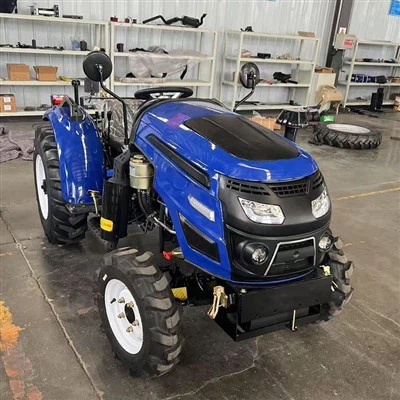
Selecting a compact farm tractor isn't just about picking a machine-it's about matching its capabilities to your specific tasks, land size, and long-term usage goals. While compact tractors are versatile, choosing the wrong model can lead to inefficiency, unnecessary costs, or even safety risks. The right selection depends on key factors like task requirements, power output, implement compatibility, and usability features.
Below is a detailed, practical guide to help you navigate the compact farm tractor selection process, breaking down critical considerations to ensure your choice aligns with your needs.
1. Start with Your Core Tasks: Define What You'll Use It For
The first step in choosing a compact tractor is clarifying your primary and secondary tasks-this directly dictates the tractor's required power, attachments, and design. Compact tractors are used for everything from small-scale farming to property maintenance, but different tasks demand different capabilities:
A. Primary Task Categories & Tractor Needs
Lawn & Property Maintenance: Tasks like mowing large lawns, trimming hedges, or clearing light debris require a tractor with good maneuverability and compatible mowing attachments (e.g., finish mowers, brush hogs). Look for models with a tight turning radius (under 10 feet) and a mid-mount attachment system (for mowers that follow ground contours).
Soil Preparation & Planting: If you're tilling gardens, plowing small fields, or planting crops, focus on tractors with strong traction (rear-wheel drive or 4WD) and three-point hitch compatibility (to attach tillers, plows, or seeders). A minimum of 25 horsepower (HP) is recommended for tilling 1–5 acres; larger plots (5–10 acres) may need 35–45 HP.
Material Handling: Hauling hay bales, firewood, or fertilizer requires a tractor with a front-end loader attachment and sufficient lifting capacity. Check the loader's "lift capacity at pivot" (how much weight it can lift at the front) - 500–800 pounds is ideal for small loads, while 800–1,200 pounds works for heavier items like round hay bales.
Livestock Care: Feeding animals, cleaning barns, or hauling water tanks calls for durability (to withstand manure or mud) and easy access to attachments like manure spreaders or water pumps. Look for sealed electrical systems (to prevent corrosion from moisture) and heavy-duty tires (for muddy conditions).
B. Secondary Tasks: Plan for Future Needs
Don't just focus on today's tasks-consider if you'll expand your operations later. For example:
If you currently mow 2 acres but plan to add a small orchard in 2 years, choose a tractor that can handle both mowing and orchard-specific attachments (e.g., sprayers, fruit pickers).
If you start with gardening but want to add livestock, prioritize a model with a three-point hitch (for future manure spreaders) and enough HP to pull a small trailer.
2. Power & Performance: Horsepower, Drive Type, and Traction
Power (measured in HP) and drive type are non-negotiable factors-too little HP will leave you struggling with tasks, while too much will waste fuel and increase costs. Compact tractors typically range from 15–50 HP; here's how to match power to your needs:
A. Horsepower (HP) Guidelines
HP is split into two categories: engine HP (total power from the engine) and PTO HP (power take-off-used to run attachments like mowers or tillers). PTO HP is often 10–15% lower than engine HP, so focus on PTO HP for attachment compatibility:
15–25 HP: Ideal for small-scale tasks (mowing 1–2 acres, light tilling, hauling small loads). Best for residential properties or hobby farms under 1 acre.
25–35 HP: Versatile for mid-sized tasks (tilling 2–5 acres, plowing small fields, lifting 500–800-pound loads). Suitable for hobby farms (1–5 acres) or small commercial operations.
35–50 HP: For larger tasks (tilling 5–10 acres, hauling heavy hay bales, using larger implements like disc harrows). Recommended for commercial small farms or properties over 5 acres.
B. Drive Type: 2WD vs. 4WD
2WD (Rear-Wheel Drive): Cheaper, lighter, and more fuel-efficient. Best for flat, dry terrain (e.g., mowing level lawns) or light tasks. Not ideal for muddy, hilly, or uneven ground-traction will be limited.
4WD (Four-Wheel Drive): More expensive but offers better traction on slopes, mud, or rough terrain. Essential for soil preparation (tilling, plowing), material handling on uneven ground, or any task where the tractor might slip. Most users with non-flat land or heavy tasks prefer 4WD.
C. Transmission Type: Manual vs. Hydrostatic
The transmission controls how power is sent to the wheels-affecting ease of use and task suitability:
Manual Transmission: Uses gears (like a car) and requires shifting. More durable, cheaper to repair, and better for heavy, consistent tasks (e.g., plowing, tilling at a steady speed). Best for users comfortable with gear shifting.
Hydrostatic Transmission: Uses fluid pressure to control speed (no shifting-just push a pedal or lever). Easier to operate (great for beginners) and ideal for tasks that require frequent speed changes (e.g., mowing around trees, loading/unloading). However, it's more expensive to repair and may not be as efficient for heavy, long-duration tasks.

3. Attachment Compatibility: Ensure It Works with What You Need
Compact tractors rely on attachments to handle different tasks-if a tractor can't use the tools you need, it won't be useful. Key compatibility features to check:
A. Hitch Systems
The three-point hitch (a standard for attaching rear-mounted implements like tillers, plows, or spreaders) is a must for most farming tasks. It's rated by "categories" based on tractor size:
Category 0: For tractors under 20 HP (light attachments like small tillers or lawn sweepers).
Category 1: For tractors 20–45 HP (most common-fits mid-sized tillers, plows, mowers, and manure spreaders).
Category 2: For tractors over 45 HP (larger implements like heavy-duty disc harrows-rare for compact models).
Most compact tractors (20–50 HP) use Category 1 hitches-ensure this is included if you plan to use rear-mounted tools.
B. Front-End Loader Compatibility
A front-end loader is one of the most useful attachments-check if the tractor is "loader-ready" (pre-wired for hydraulics, has mounting points) or if you need to buy a loader separately. Also, confirm the loader's compatibility with the tractor's HP: a loader designed for a 30 HP tractor won't work with a 20 HP model (it will strain the engine).
C. PTO (Power Take-Off) Options
The PTO is a shaft that transfers power from the tractor to attachments (e.g., mowers, sprayers). Compact tractors have two common PTO types:
Rear PTO: For rear-mounted attachments (tillers, spreaders). Most models have this as standard.
Mid PTO: For mid-mounted attachments (finish mowers, brush hogs). Essential if you plan to mow-mid-mount mowers follow ground contours better than rear-mount ones.
Check the PTO speed (measured in RPM): most compact tractors offer 540 RPM (standard for most attachments) or 1,000 RPM (for larger, faster tools). Ensure the attachments you want (e.g., a 540 RPM tiller) match the tractor's PTO speed.
4. Usability & Comfort: Don't Overlook Day-to-Day Use
If you'll be operating the tractor for hours at a time, comfort and usability features will affect your productivity and satisfaction:
A. Operator Space & Ergonomics
Seat: Look for a padded, adjustable seat (height, tilt) to reduce fatigue during long sessions. Some models have suspension seats (great for rough terrain).
Controls: Buttons, levers, and pedals should be easy to reach (no stretching) and labeled clearly. Hydrostatic transmissions (with pedal controls) are more intuitive for beginners than manual gear shifts.
Visibility: The operator should have a clear view of the front (for loading) and rear (for checking attachments). Avoid models with large hoods or obstacles that block sightlines.
B. Safety Features
ROPS (Roll-Over Protective Structure): A metal frame that protects the operator if the tractor rolls over-mandatory for most farming tasks and a must-have for hilly terrain.
Seatbelt: Always paired with ROPS-ensure it's comfortable and easy to fasten.
Brakes: Check if the tractor has "differential locks" (locks the rear wheels together for better traction on slippery ground) and reliable wet-disc brakes (last longer than dry brakes, especially in mud).
C. Fuel Tank Size & Range
Fuel tank capacity (typically 5–15 gallons for compact tractors) affects how long you can work between refuels. For example:
A 10-gallon tank on a 30 HP tractor (using 1–1.5 gallons per hour) gives 6–10 hours of runtime-ideal for full-day tasks like tilling.
A 5-gallon tank is better for short tasks (mowing 1–2 hours at a time) but will require frequent refueling for longer jobs.
5. Budget & Long-Term Costs: Look Beyond the Purchase Price
The upfront cost of a compact tractor ranges from $10,000 (15–25 HP, basic model) to $30,000+ (40–50 HP, fully equipped with loader). But don't forget long-term costs:
A. Maintenance & Repair Costs
Parts Availability: Tractors from well-known brands (with local dealers) have easier-to-find parts (e.g., filters, belts) and lower repair costs. Generic or imported models may have cheaper upfront prices but expensive, hard-to-get parts.
Service Needs: Simple mechanical models (manual transmission, no electronics) cost less to maintain than advanced ones (hydrostatic transmission, digital diagnostics). Factor in dealer service costs if you won't do maintenance yourself.
B. Resale Value
Brands with strong reputations for durability (e.g., Kubota, John Deere) hold their value better-if you plan to sell the tractor in 5–10 years, a reputable brand will fetch a higher resale price than a generic one.
C. Financing & Warranties
Most dealers offer financing (low-interest loans for 3–5 years) to spread out costs. Also, check the warranty: a 2–3 year bumper-to-bumper warranty covers most repairs, while a 5-year powertrain warranty (covers engine, transmission) adds long-term security.
Final Tips: Test Before You Buy
Once you've narrowed down your options, test-drive the tractor to ensure it fits your needs:
Operate it on terrain similar to your property (slopes, mud, flat ground) to check traction and comfort.
Attach the tools you'll use most (e.g., a mower or loader) to see how the tractor handles them-does it have enough power? Is the attachment easy to connect?
Ask the dealer for a demo of maintenance tasks (e.g., changing the oil, accessing filters) to ensure you can handle routine upkeep.
By focusing on your tasks, power needs, attachment compatibility, and long-term costs, you'll choose a compact farm tractor that works for you-not against you-for years to come.
Hanhong International is a professional supplier of tractors and agricultural machinery.We will provide you with professional services.
Buyers from all over the world are welcome to contact us to discuss cooperation!