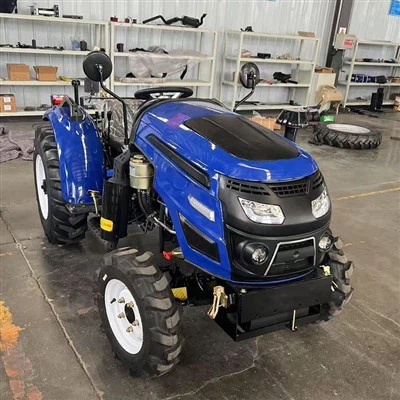
Visual Inspection of the Tractor's Electrical System
Perform a comprehensive visual inspection of the tractor's electrical system, focusing on key areas prone to failure.
a. Inspection Areas
Starting System
Check the battery terminals for looseness or oxidation, and the cables for damage or deterioration.
Check the starter motor terminals for secure connections and any burn marks on the motor housing.
Charging System
Check the alternator belt for tightness and wear, and the terminals for oxidation or looseness.
Check the regulator wiring harness for integrity and signs of short circuits or open circuits.
Lighting System
Check the headlight, taillight, and turn signal bulbs for integrity and sockets for rust or poor contact. Check the light switch and wiring connectors for looseness or water ingress.
Instrument System
Check whether the instrument panel indicator lights are on or off normally, and whether the instrument needles are stuck or malfunctioning.
Check the instrument wiring harness connectors for looseness or oxidation.
Control Circuit
Check whether all control switches (such as the throttle switch and hydraulic control switch) are flexible and whether the contacts are oxidized.
Check the relays and fuse boxes for blown fuses, and whether the relays have any unusual noises or a burning odor.

b. Signs of Fault
Unusual Odors: A short circuit or overload may produce an odor of burning plastic or insulation.
Sparking: Sparks at the wiring when turning on the power or operating a switch usually indicate poor contact or a short circuit.
Hot Components: If switches, relays, motors, and other components become noticeably hot when touched, there may be a circuit fault.
Functional Malfunctions: If the starter doesn't respond, the lights don't illuminate, or the instrument display doesn't show anything, these directly indicate a problem in the corresponding circuit. Using a Multimeter
If visual inspection cannot pinpoint the fault point, use a multimeter to measure circuit parameters for further troubleshooting.
Steps:
Set the multimeter to the appropriate setting (voltage, resistance, etc.).
Check the battery voltage. Under normal circumstances, the static voltage should be between 12V and 13V, and the voltage should not drop below 9.6V during startup. If the voltage is abnormal, the battery may be discharged or damaged.
Measure the generator output voltage. After starting the tractor, the voltage should be between 13.5V and 14.5V. If it is outside this range, there is a problem with the charging system.
For suspected open circuits, use a resistance block to test for continuity. A resistance of 0 indicates continuity, while infinite resistance indicates an open circuit.
When inspecting components such as switches and relays, measure the contact resistance. Normally, it should be close to 0. Excessive resistance indicates oxidation or poor contact.
Test the circuit in sections
For complex circuit systems, you can use a section-by-section testing method to gradually narrow down the scope of the fault.
Steps:
Based on the circuit schematic, divide the circuit potentially involved into several sections.
Starting at the power supply, disconnect each section in turn and measure the voltage, resistance, and other parameters of each circuit.
Compare these parameters to normal values to identify the section with the abnormality and conduct a detailed inspection of the components and circuits within that section.
For example, if the lighting system is faulty, first check the voltage at the main light switch, then check the voltage at the sub-circuits, gradually locating the fault to the specific lamp socket or circuit.
Simulated Operating Condition Testing
Some circuit faults only occur under specific operating conditions and require testing that simulates actual operating scenarios.
Steps:
Start the tractor and observe whether the circuit system exhibits any abnormalities (e.g., flickering lights or instrument needles) at idle, medium, and high speeds.
Operate various control switches, such as the lift hydraulics and gear shifting, while observing the proper functioning of the relevant circuit components.
Driving on bumpy roads or vibrating the tractor can cause poor circuit contact, resulting in intermittent function. Replacement Component Testing
For suspected damaged components (such as relays, switches, fuses, etc.), replacement testing can be performed.
Steps:
Prepare a working component of the same model.
Remove the suspected faulty component and replace it with a working one.
Start the tractor or operate a function. If the fault disappears, the original component is damaged. If the fault persists, continue troubleshooting other parts.
The above method can systematically identify electrical faults in agricultural tractors, allowing for timely identification and repair, ensuring the normal operation of the tractor. If you encounter complex faults during the troubleshooting process, it is recommended to refer to the tractor's circuit schematics or seek assistance from a professional repair technician.
Hanhong International is a professional supplier of tractors and agricultural machinery.
We will provide you with professional services. Buyers from all over the world are welcome to contact us to discuss cooperation!