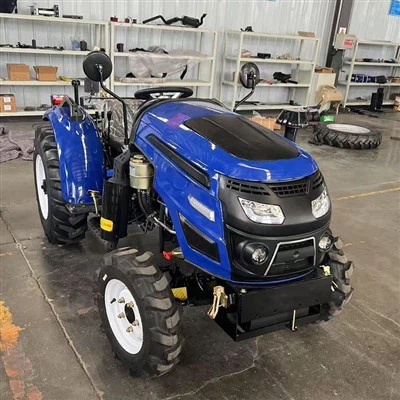
Agricultural Tractor Tire Maintenance Guide: Practical Strategies to Extend Life and Improve Performance
As the sole means of contact between the equipment and the ground, the condition of agricultural tractor tires directly impacts operating efficiency, fuel consumption, and field safety. Proper maintenance not only prevents unplanned downtime but also maximizes tire lifespan and reduces long-term operating costs. The following systematically outlines key points for tire maintenance throughout the entire lifecycle, covering inspection, pressure management, load control, cleaning and maintenance, and storage protection.
1. Regular Inspection: The First Line of Defense
Tire failures often result from the accumulation of minor damage. Regular inspections should focus on "early warning signs":
Tread Condition Assessment
Measure tread depth: Use a tread gauge. When the depth falls below the manufacturer's specified "safety line" (usually ≤15mm), replace the tire promptly to prevent reduced traction and slippage.
Observe wear patterns: Unilateral wear may indicate toe or camber anomalies, requiring alignment. Excessive wear in the center of the tread is often a sign of overinflated tire pressure, while wear at the edges may indicate underinflated tire pressure. Structural Damage Inspection
Sidewall and tread: Focus on inspecting for cracks (a sign of aging), cuts (caused by field debris), and bulges (broken internal cords, requiring immediate removal from service).
Valve system: If the valve stem is cracked or the rubber is hardened, replace it promptly. Missing valve caps can allow dust to enter, causing slow leaks. Ensure they are tightened after each inspection.
Rim Inspection
Rim deformation, rust, or damage to the bead seat can compromise airtightness and cause slow leaks. Regularly clean the inside of the rim and check the tightness of the bolts.
Recommended Inspection Frequency: Perform a quick visual inspection before daily operation; measure tire pressure and tread depth weekly; and perform a comprehensive inspection before and after busy agricultural seasons (such as planting and harvesting).
2. Precise Air Pressure Management: The Key to Balancing Performance and Lifespan
Tire pressure is the tire's "blood pressure." Incorrect pressure can directly lead to performance degradation and shortened lifespan:
The Dangers of Abnormal Tire Pressure
Underinflated tires: Excessive sidewall flexion increases internal rubber heat generation, which can easily cause delamination. The increased contact patch leads to uneven pressure distribution, resulting in increased soil compaction and impacting crop root development.
Overinflated tires: Excessive contact pressure at the center of the tread accelerates localized wear. The tire's cushioning performance decreases, making it more susceptible to impact damage and increasing the risk of blowouts under heavy loads.
Scientific Pressure Adjustment Strategies
Adjust based on load and application:
Field operations (e.g., plowing, seeding): Reduce tire pressure to "working pressure" (refer to the manual, typically 8-12 PSI) to increase the tread contact patch, improve traction, and reduce soil compaction.
Road transportation: Increase tire pressure to "transport pressure" (16-20 PSI) to reduce rolling resistance and save fuel. Use specialized tools: Choose a tire pressure gauge specifically designed for agriculture with an accuracy of ±0.5 PSI to avoid errors caused by the range mismatch of standard automobile tire pressure gauges.
Operational Tip: Tire pressures should be measured when the tires are cool (at least 2 hours after parking). High readings on hot tires can be misleading.

3. Load and Weight Distribution: Key to Avoiding Structural Damage
The tire's load capacity is its design limit. Overloading or uneven loading can directly damage the rubber and cord structure.
Appropriate Load Control
Refer to the "Maximum Load Index" on the tire sidewall and calculate the total weight based on the type of operation (e.g., attaching a seed drill or harvester) to avoid exceeding the rated load on a single tire.
When using liquid ballast (such as calcium chloride solution) or rim weights, ensure that the load is evenly distributed between the front and rear axles to ensure the front and rear wheel load ratio meets the tractor's design standards (typically 50:50 or 60:40). Dynamic Balance Management
Avoid sudden acceleration and braking during operation to reduce tire slip (it is recommended to keep the slip rate within 10%-15%, as higher slip can cause localized overheating of the tread). During transport, cargo should be placed centrally to prevent unilateral loading that can cause snaking or uneven tire wear.
4. Cleaning and Maintenance: Remove Corrosion Sources to Extend Rubber Life
Dirt and chemicals in field environments are "invisible killers" for tires:
Daily Cleaning Tips
Immediately rinse after operation: Use a high-pressure water gun to remove dirt and stones from the tread grooves (embedded stones may cause tread cracking), focusing on the area where the sidewall meets the rim.
Chemical Neutralization: If contact with fertilizers (containing ammonia) or herbicides has occurred, rinse with mildly alkaline soapy water to prevent chemical corrosion (long-term exposure to acidic substances can cause hardening and cracking of rubber).
In-depth Maintenance
Spray a rubber protective agent (containing UV protection) on the tire surface annually, especially for equipment that has been stored for an extended period, to slow rubber aging.
5. Seasonal Storage: Off-season protection determines the tire's "sleeping quality."
When tires are stored for extended periods, they can be subjected to continuous pressure or exposed to harsh environments, potentially causing irreversible damage:
Pre-storage Pretreatment
Tire Decompression: Deflating the tire to 50% of the nominal pressure prevents prolonged storage, which can cause localized tread depressions ("flat spots").
Clean and Dry: Thoroughly rinse the tires and wipe them dry. Inspect and repair minor damage (such as filling shallow cracks with rubber patching compound).
Storage Environment Control
Physical Support: Lift the tire off the ground with wooden blocks or a jack, placing the weight on the vehicle frame. If lifting is not possible, rotate the tire a quarter turn weekly to avoid prolonged pressure on a single point.
Environmental Isolation: Store in a cool, dry, and well-ventilated area, away from direct sunlight (ultraviolet rays can break rubber molecular chains), heat sources (such as boiler rooms), and chemicals (such as engine oil and pesticides). Cover with a breathable dust sheet, but avoid plastic film (which can cause condensation to accumulate).
Hanhong International is a professional supplier of tractors and agricultural machinery.
We will provide you with professional services.
Buyers from all over the world are welcome to contact us to discuss cooperation!