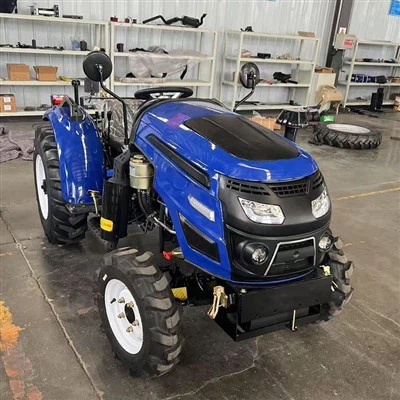
In August, some areas experienced continuous heavy rainfall, exceeding historical records for the same period in a short period. This resulted in severe flooding in many areas, inundating villages, flooding farmland, and disrupting roads, posing a serious threat to the safety of people's lives and property. In this critical battle against flooding, tractors, leveraging their unique advantages, became the "main force" in emergency relief efforts and agricultural self-rescue efforts, playing an irreplaceable and important role.
Tractors' powerful power output and excellent maneuverability demonstrate significant advantages in complex disaster environments. In villages with deep water and muddy roads, ordinary vehicles are completely unable to pass. However, tractors equipped with large off-road tires and a chassis height of several tens of centimeters can navigate these areas with ease. In one severely affected village, a makeshift rescue convoy of more than ten tractors, each capable of carrying five to eight trapped people at a time, braved the heavy rain and the risk of landslides to carefully move the elderly, children, and disabled villagers from the danger zone to higher ground. In just one day, this tractor rescue team evacuated over 300 people and delivered over 200 boxes of relief supplies, including drinking water, instant noodles, and bedding, effectively ensuring their basic needs.

As the floodwaters gradually receded, agricultural self-rescue efforts in the affected areas quickly began, with tractors once again becoming a vital aid for farmers. In flooded farmland, prolonged stagnant water can lead to soil hypoxia, severely impacting crop growth and even resulting in total crop failure. Farmers, using tractors with drainage equipment such as pumps attached to the rear, slowly drove along the ridges of the fields to quickly drain the water. A large-scale grower stated, "I have over 50 mu (approximately 1,000 acres) of corn fields. After the floodwaters receded, the deepest part of the water was over half a meter. Manual drainage would have taken at least two weeks, but using a tractor-driven pump, we were able to drain the water in just three days. Although some of the corn was slightly affected, at least we were able to save most of our harvest." In addition to draining, farmers also used tractors to perform shallow tillage on less flooded plots. The tractor's plowshare loosened the compacted soil, improving soil permeability and creating favorable conditions for crop recovery.
The local agricultural machinery department also took immediate action, actively mobilizing professional technicians and experienced operators to participate in rescue and agricultural self-rescue efforts. Technicians not only thoroughly inspected the tractors involved in the rescue but also equipped them with protective equipment such as anti-skid chains and emergency lighting to ensure safe operation in the challenging conditions. To address potential tractor failures such as short circuits and water intrusion, agricultural machinery authorities set up temporary repair stations in the disaster area. Maintenance personnel were on call 24 hours a day to provide timely repair services to farmers, ensuring their tractors could continue to be used in disaster relief and self-rescue efforts. During this disaster response, tractors not only protected the lives and property of the people but also brought hope for a rapid recovery in agricultural production.