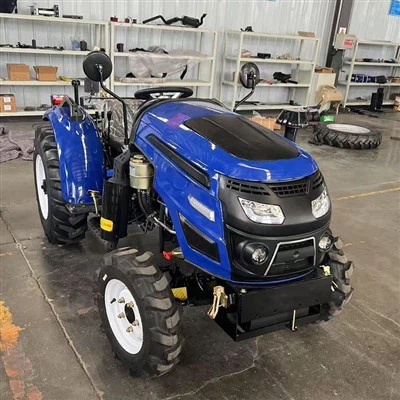
Tractor tires play a critical role as "mobile foundations" in every aspect of agricultural production. They not only bear the tractor's overall weight but also directly impact operating efficiency (such as traction), fuel consumption (improper tire pressure can increase fuel consumption by 10%-15%), and operational safety (a blowout can lead to a rollover accident). According to agricultural machinery industry statistics, tire failures account for approximately 30% of tractor downtime during the busy farming season, and regular inspections can prevent over 80% of tire-related failures.
Tractor tire inspections are not a "set formula" and must be flexibly adjusted based on operating intensity, terrain, and seasonal variations. This article will provide farmers with a practical tire management plan based on four dimensions: graded inspection frequency, core inspection points, adaptation to specific scenarios, and long-term maintenance techniques, ensuring consistent tractor operation.
I. Classification by Usage Intensity: A "Dynamic Inspection" Schedule for Tractor Tires
Tractor tire wear rates vary significantly depending on the operating hours and loads of the tractor. We categorize inspection frequency into five levels, ranging from daily quick checks to professional, in-depth assessments, covering all scenarios, from off-season to busy season.
1. Before each start: A 5-minute "safety pre-check" eliminates immediate risks.
Whether it's the high-frequency work during the planting season or daily, sporadic field transport, a simple pre-start inspection of the tractor is the first line of defense against unexpected malfunctions. This step requires no specialized tools and focuses on "immediately visible risk points":
Initial tire pressure check: Use a portable tire pressure gauge to quickly check tire pressure against the recommended tire pressure chart in the tractor cab (or the standard value marked on the tire side). If the tire pressure is 5% below the standard, excessive sidewall deformation during driving may occur, increasing the risk of a blowout. If it is 10% above the standard, excessive wear in the center of the tread will shorten tire life. Quick visual inspection: Walk around the tire and visually inspect three key areas: Check for sharp objects like nails or broken glass embedded in the tread (if such objects penetrate the tire, they may cause a slow leak); Check for bulges on the sidewall (bulges indicate internal cord breakage, making continued use of the tire prone to explosions), cracks, or scratches; Check for unilateral wear on the shoulder (possibly indicating front wheel misalignment).
Bead and tread: Feel the area where the tire meets the rim (bead) for oil or dust accumulation (typical signs of a leak); Observe the tread (especially the anti-skid tread on the drive wheel). If the tread is filled with mud, clean it briefly to prevent traction loss.
2. Every 40-50 hours / Weekly: Advanced Inspection to Track Wear Trends
Tractors operating for more than 10 hours per week (e.g., continuous deep plowing or fertilizer transport) require a more detailed inspection, focusing on assessing tire wear rates and potential problems:
Tread Depth Measurement: Use a tread depth gauge to check the tread thickness. If the tread depth of the tractor's rear (drive) wheels is less than 12mm, traction in muddy terrain will decrease by over 40%. If the tread depth of the front (guide) wheels is less than 8mm, the tractor will tend to pull away during steering, making it more difficult to operate.
Hidden Damage Inspection: Use a stiff-bristle brush to clean dirt and weeds from the tread. Check for fine cracks in the tread crevices (especially tires operating in dry areas, which are prone to "crazing" due to rubber aging). Press the tread surface with your palm. If you feel a soft spot (slow rebound after pressure), it may be due to internal cord separation and requires prompt repair. Related Component Inspection: Check for leaks in the hydraulic and diesel lines near the tires. Grease corrodes rubber, and prolonged contact can accelerate tire aging by three times. Also, inspect the wheel hub for deformation (hub deformation can cause uneven tire stress, resulting in "wave-like wear").
3. Every 150-200 hours/month: Conduct a comprehensive assessment to adapt to operational needs.
If the tractor operates in complex environments (such as rocky mountainous terrain or saline-alkali farmland), a monthly comprehensive inspection can identify hidden wear and tear and prevent minor problems from becoming major failures.
Load Matching Verification: Check the "load markings" on the side of the tire (e.g., "112" indicates a maximum load of 1120 kg per tire) to confirm that the current operating load (e.g., the weight of a plow being pulled or the weight of grain being transported) is within a safe range. Overloading by 10% can shorten tire life by 20%, and overloading by more than 20% can directly lead to tire rupture. Valve Maintenance: The valve is a critical component for maintaining stable tire pressure. Check for cracks (aged valves are prone to leaks) and that the valve cap is tightened (a missing valve cap can allow dust to enter and clog the valve core). It's recommended to replace the valve core gasket every three months to prevent slow leaks.
Dual Tire Alignment (if applicable): For tractors equipped with dual rear wheels, ensure the tire pressure on both tires is consistent (within 0.3 bar) and that the gap between the two tires is maintained at 12-15mm. If the gap is too small, the two tires will rub against each other, causing excessive sidewall wear. If the gap is too large, traction will be affected.

4. Every 500-600 hours / every quarter: Special seasonal inspections to adapt to farming seasons.
Spring sowing and autumn harvest are critical periods in agricultural production, and tractor operations increase dramatically. Seasonal inspections ensure tires are "seasonally adapted":
Aging Assessment: Lightly scratch the side of the tire with your fingernail. If the scratch rebounds quickly, the rubber is in good condition. If the scratch persists for more than 10 seconds, or a crack deeper than 1mm appears on the side of the tire, even if the tread is intact, replacement is recommended. Aged rubber significantly reduces its impact resistance and is prone to cracking in bumpy fields.
Cleaning and Protection: Use a high-pressure water jet to rinse away dirt from the tire surface (especially after working in saline-alkali land, thoroughly rinse away salt). After drying, apply a special rubber protectant (avoid using substitutes such as motor oil and diesel, as these accelerate rubber aging). If the tractor is to be parked outdoors, use a sunscreen to slow down aging caused by UV rays. Seasonal Tire Pressure Adjustment: During spring planting, to reduce soil compaction (which can hinder crop root growth), reduce tire pressure to 80% of the standard value (e.g., 2.0 bar instead of 2.5 bar) to increase the tire's contact patch. During autumn harvest, if fully loaded grain trucks are being transported, increase tire pressure to 90% of the standard value (without exceeding the upper limit) to enhance tire load-carrying capacity.
5. Every 1000 hours/year: Professional in-depth assessment to determine repair or replacement
For large tractors operating over 500 hours per year (such as farm staples), an annual professional inspection can scientifically determine the tire's residual value and avoid blind replacement or overuse.
Internal Structure Inspection: Invite professionals from a tire dealer or agricultural machinery repair station to inspect the tire's interior using an ultrasonic detector. This can identify problems that are invisible to the naked eye, such as broken cords and bubbles in the carcass. If these issues are not addressed promptly, they can lead to sudden tire blowouts during operation. Repair and Replacement Recommendation Assessment: If the tire carcass is intact and only the tread is worn, a professional will assess whether it is suitable for "retreading." (Re-vulcanizing the tread can extend the tire's life by 50% at only 30% of the cost of a new tire.) If the sidewall has irreparable cracks or extensive internal cord breaks, it should be replaced promptly to avoid safety risks.
TPMS Calibration (if equipped): Tractors equipped with a Tire Pressure Monitoring System (TPMS) require professional sensor calibration. After long-term use, sensor data may deviate. Calibration ensures accurate and real-time tire pressure data, preventing malfunctions caused by false or missed alerts. II. Special Scenarios: Adjust Inspection Frequency Based on Environment
In addition to routine inspections, the following four special scenarios require more frequent inspections to prevent environmental factors from accelerating tire wear:
Heavy Loads/Rough Terrain: If the tractor frequently transports loads exceeding 3 tons (such as a full load of fertilizer or grain), or operates on rocky or steeply sloped terrain, it is recommended to inspect the tire every 20-30 hours. In these situations, the impact force on the tires is 2-3 times greater than in normal field operations, making sidewall scratches and tread "chipping" (tread blocks falling off) more likely to occur.
Long-Term Idleness (over 1 month): Tractors parked for extended periods during the off-season require monthly inspections. When idle, the tires bear the static weight of the tractor for extended periods, making them susceptible to "partial flats." (After being parked for more than 3 months, flattening may not recover.) Furthermore, tires parked outdoors experience accelerated aging due to rain and ultraviolet rays, requiring regular inflation (reinflation every 2 months, maintaining a pressure of 110% of the nominal value).
Wet/Muddy Environments: After rain or paddy field work, inspect your tires after each use. Mud can mask cracks and foreign matter on the tread. If not cleaned promptly, foreign matter can gradually penetrate the tire carcass, causing "slow deflation." It's recommended to rinse the tires with a high-pressure water jet and then dry them with a dry cloth to prevent acidic substances in the mud from corroding the rubber.
High-Frequency Road Transport: If your tractor frequently travels on roads (such as transporting seeds from a warehouse to a field, a distance exceeding 5 kilometers each way), you should inspect it weekly. High road speeds (typically 30-40 km/h) generate significant heat from friction between the tire and the road, which can easily lead to overheating and aging of the sidewalls. Roads also carry a high concentration of foreign matter such as gravel and glass, requiring prompt cleaning of the tread.
III. 4 Practical Tips for Extending Tire Life
Inspection is fundamental, but routine maintenance is the key to extending tire life. Mastering the following four tips can extend the life of your tractor tires by over 25%:
1. Accurately control tire pressure to adapt to the operating scenario
Tire pressure is a core parameter for tires and should be adjusted according to the specific task:
Light-load operations (such as seeding and pesticide spraying): Use lower tire pressure (80%-85% of the standard value) to increase contact area and reduce soil compaction;
Heavy-load operations (such as deep plowing and transporting heavy loads): Use higher tire pressure (90%-95% of the standard value) to enhance tire support and avoid excessive deformation;
Tire pressure should be measured when the tires are cool (after at least one hour of downtime). Tires that have just finished operating may have a 10%-15% higher reading due to thermal expansion and contraction, making the reading less reliable.
2. Proper weight distribution to avoid tire "biased loading"
An imbalance in the load ratio between the front and rear wheels of a tractor is one of the main causes of uneven tire wear:
Insufficient front wheel weight distribution: The front wheels are prone to slipping during steering, resulting in "unilateral wear" of the front tire tread. This can be corrected by adding front wheel weights (usually 50-100 kg per side).
Insufficient rear wheel weight distribution: The rear wheels are prone to spinning during driving, causing the rear tire tread to wear out quickly. Liquid weights (such as calcium chloride solution) can be added to the rear wheels to increase the rear wheel load ratio to 65%-70% of the total load.
3. Scientific storage to slow down aging
Storage methods during the off-season directly affect the tire's "dormant life":
Short-term storage (1-3 months): Park the tractor on a flat concrete surface with the tires inflated to 110% of the standard value to avoid prolonged localized pressure. If conditions permit, place wooden planks under the tires to reduce direct friction with the ground. Long-term storage (over 3 months): Use a jack to prop up the tractor and keep the tires off the ground (to avoid static deformation). Spare tires should be hung vertically in a dry, ventilated warehouse. Avoid stacking them flat (stacking can cause tire deformation).
4. Rotate and replace tires regularly to ensure even load distribution.
The front and rear tires of a tractor wear at significantly different rates (rear wheels, as drive wheels, wear 1.5-2 times faster than front wheels). Proper rotation can even out wear:
Rotation cycle: Swap the front and rear wheels (of the same specification and pattern) or the left and right wheels (if one side is severely worn) every 500 hours of operation.
Replacement guidelines: If the wear depth of two tires on the same axle differs by more than 3mm, it is recommended that they be replaced simultaneously. Mixing old and new tires will result in uneven load distribution and accelerate the wear of the new tire by 50%.
Hanhong International is a professional supplier of tractors and agricultural machinery. We will provide you with professional services and welcome global buyers to contact us for cooperation!