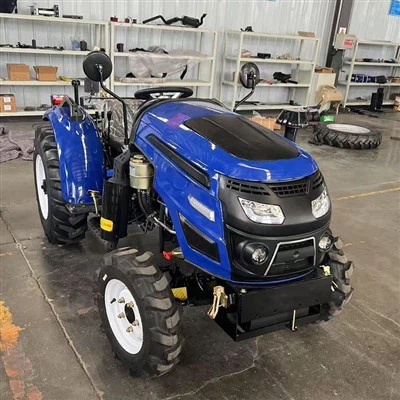
1. Understanding Tractor Cooling System Demands
A farm tractor's cooling system faces harsh realities: long working hours under heavy loads, exposure to dust and debris, and temperature swings from freezing mornings to scorching afternoons. The cooling fluid must:
Regulate Temperature – Absorb and dissipate heat to keep the engine, hydraulics, and transmission within optimal operating ranges (typically 85–105°C for engines).
Prevent Corrosion – Protect metal components (radiators, water pumps, cylinder heads) from rust and electrolysis.
Resist Freezing/Boiling – Maintain performance in extreme cold (down to - 35°C) and high heat (over 100°C).
Lubricate – Ensure smooth operation of the water pump and prevent seal wear.
2. Types of Cooling Fluids for Tractors
a. Conventional Coolant (Inorganic Additive Technology – IAT)
Composition: Mixes ethylene glycol or propylene glycol with water and inorganic additives (phosphates, silicates).
Pros: Cost - effective, widely available, and works for older tractors with simple cooling systems.
Cons: Shorter lifespan (needs replacement every 2–3 years), and silicates can form deposits in modern high - efficiency radiators.
b. Organic Acid Technology (OAT) Coolant
Composition: Uses organic acids (carboxylic acids) for corrosion protection, no silicates or phosphates.
Pros: Long - lasting (up to 5–10 years or 15,000 hours), compatible with aluminum components (common in new tractors), and reduces deposit formation.
Cons: More expensive, and not always backward - compatible with older IAT - designed systems.
c. Hybrid Organic Acid Technology (HOAT) Coolant
Composition: Combines OAT and IAT additives (e.g., silicates + organic acids) for balanced protection.
Pros: Works for a wide range of tractors (new and old), offers good corrosion resistance, and lasts 3–5 years.
Cons: Requires careful matching to the tractor's material compatibility (some HOAT formulas are specific to certain manufacturers).

3. Key Specifications for Cooling Fluids
a. Freezing and Boiling Points
Freezing Point: A 50/50 coolant - to - water mix (standard for tractors) should freeze at - 37°C (ethylene glycol) or - 27°C (propylene glycol). Propylene glycol is less toxic, making it safer for farms with livestock.
Boiling Point: At 100% concentration, ethylene glycol boils at 197°C; when mixed 50/50 with water, it boils at 106°C – crucial for preventing overheating under heavy loads.
b. Corrosion Inhibitors
OAT coolants use carboxylic acids to form a protective film on metal surfaces, while IAT relies on phosphates and silicates. For tractors with aluminum radiators (common in modern models), OAT or HOAT (with minimal silicates) is essential to avoid galvanic corrosion.
c. Compatibility with Seals and Hoses
Coolant must not degrade rubber hoses or gaskets. OAT coolants are formulated to be compatible with modern synthetic rubber seals, while older IAT coolants work with traditional natural rubber. Always check the tractor manual for "coolant type vs. seal material" guidelines.
4. Best Practices for Cooling Fluid Use
a. Match to Tractor Age and Design
New Tractors (2010+): Most require OAT or HOAT coolants (e.g., John Deere's Extended Life Coolant, Case IH's HD OAT). These protect aluminum engines and complex cooling systems.
Older Tractors (Pre - 2010): IAT coolants are often sufficient, but check for compatibility if you've upgraded components (e.g., a new aluminum radiator may need HOAT).
b. Maintain Proper Mixture
Always use distilled water (not tap water) to mix with coolant. Tap water contains minerals that cause deposits and corrosion. A 50/50 mix is ideal for most climates; in extreme cold, increase to 60/40 (coolant - to - water) for lower freezing points.
c. Monitor and Replace Regularly
Visual Inspection: Check the coolant reservoir monthly for discoloration (brown or rust - colored coolant signals corrosion) or debris.
pH Testing: Use test strips to check acidity – coolant should stay between pH 7.5–11. A drop below 7.5 means it's acidic and corrosive.
Hanhong International is a professional supplier of tractors and agricultural machinery.
We will provide you with professional services and welcome global buyers to contact us for cooperation!