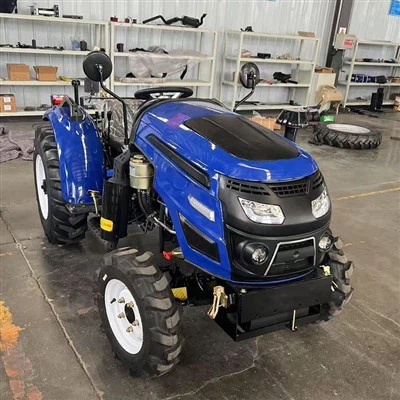
For farmers, the tractor is their "old friend" during the busy farming season-pulling the plow during spring ploughing, carrying the seed during summer planting, and assisting with transport during autumn harvest. It's essential for the year-round, demanding work. However, many people focus solely on using their tractors while neglecting their maintenance, leading to frequent tractor breakdowns and a shortened lifespan. However, proper maintenance isn't complicated. By mastering the following key points, you can keep your tractor in top condition, reduce repair costs, and ensure a smooth journey through each busy farming season.
1. Daily Maintenance: 5 Essential Things to Do Before and After Every Operation
Daily maintenance is fundamental, like a daily physical examination, helping to identify minor issues before they become major problems. Focus on these five steps:
Pre-operation checks: oil, water, gas, electrical components, and components. First, check the engine oil. Pull out the dipstick to see if the oil level is between "MIN" and "MAX" and clear (if dark or turbid, replace it immediately). Next, check the coolant. Open the radiator cap (wait until the engine has cooled) and ensure the oil level covers the radiator radiator pipes. A lack of water can cause the engine to overheat. Next, check the tire pressure and adjust it according to the operating environment. For dry land operations, use slightly higher tire pressure (180-220 kPa front, 200-240 kPa rear); for paddy field operations, lower the tire pressure (120-160 kPa front, 140-180 kPa rear) to prevent the vehicle from getting stuck or wearing out the tires. Next, check the electrical circuits, checking the battery terminals for looseness and oxidation (sandpaper to clean any oxidation). Check the lights and horn for proper function. Finally, check key components, such as the suspension system's tie rods and pins for looseness, and the clutch pedal for proper free travel (generally). 15-25mm). Tighten or adjust any problems promptly.
After work, perform "Three Cleans and One Maintenance": After work, first clean the machine body from dirt and debris, especially debris from the engine cooling fins, transmission vents, and tire treads. Clogged cooling fins can affect heat dissipation, and mud stuck in tires can cause unstable driving. Next, clean the attachment points of farm implements, such as the three-point hitch and drive shaft, using a rag to remove oil and dirt to prevent rust. Next, clean the cab, sweeping away dust and debris, and check the seat and control levers for flexibility. Finally, lubricate high-wear areas, such as the suspension pins and steering tie rod joints, using a few drops of lubricant to reduce friction.
Second, Regular Maintenance: Using a Dual Criteria of "Time + Mileage"
In addition to daily maintenance, deep maintenance should be performed at regular intervals, typically based on operating hours or mileage. The intervals vary for different components, but the key priorities are as follows:
Engine Maintenance (every 100-150 operating hours): This is the most important maintenance task. First, replace the engine oil and oil filter. Choose diesel oil that matches your engine model (e.g., CD or CF grade) and avoid mixing different brands. Next, replace the air filter. If the operating environment is dusty (such as dry land or construction sites), the replacement frequency can be shortened to 50 hours. You can also remove the filter regularly and blow out dust with compressed air (from the inside out) to extend its service life. Finally, check the injector and valve clearance. Clogged injectors will increase fuel consumption and reduce power. Excessive or insufficient valve clearance will affect engine efficiency. Consult a professional for adjustment.

Transmission and rear axle maintenance (every 200-300 operating hours): First, replace the transmission oil and rear axle gear oil. Fill the oil level to the bottom edge of the sight glass. If the oil appears milky white (possibly indicating water ingress) or contains metal debris (considering component wear), investigate immediately. Next, inspect the transmission seals, such as the input and output shaft oil seals. If there are signs of oil leakage, replace the seals immediately to prevent oil loss and dry grinding of components. Hydraulic System Maintenance (Every 300-400 operating hours): Replace the hydraulic oil and hydraulic oil filter. Hydraulic oil contamination can cause slow suspension raising and lowering and implement positioning problems. Check hydraulic line joints. If leaks are detected, tighten the joints or replace the seals. Also, test the hydraulic system pressure to ensure it meets the manufacturer's specifications (generally 16-20 MPa). Insufficient pressure can affect implement operation.
III. Special Operation Maintenance: "Special Plans" for Extreme Environments
Tractors often encounter special environments such as paddy fields, high and low temperatures, and long periods of idle time. Targeted maintenance is required to prevent "environmental adaptability failures":
Post-paddy field maintenance: The damp soil in paddy fields can easily cause rust on components. After operation, rinse the chassis, tires, and suspension system promptly. After drying, apply a layer of rust-proof oil to metal parts (such as pins and bolts). Check the transmission and rear axle for water ingress (turbid oil is a sign). If so, replace the oil immediately. Tires should be stored elevated off the ground to avoid prolonged contact with wet ground, which can cause tread degradation. Maintenance in High Temperatures (Summer): High temperatures can easily cause the engine to boil over. Regularly clean the radiator and radiator, and add a descaling agent to remove scale. Check the tightness of the fan belt. A loose belt will result in insufficient heat dissipation, while a tight belt can easily break. Press the belt with your finger; a deflection of 10-15mm is ideal. Avoid prolonged full-load operation. Rest the engine for 10 minutes every 2-3 hours to allow the engine to cool.
Maintenance in Low Temperatures (Winter): Low temperatures increase engine oil viscosity and drain the battery. Warm the engine before starting (using a preheater or adding hot water) to prevent damage to components from cold starts. Replace with winter-specific engine oil (lower viscosity, such as 5W-30) and antifreeze (with a freezing point 5-10°C below the local minimum temperature). When parked for long periods, start the engine and run it for 10-15 minutes daily to charge the battery and prevent drain.
Maintenance in Long-Term Idleness (Agricultural Off-season): If the engine is not used for more than three months, it should be thoroughly serviced before storage. First, drain the oil from the engine, transmission, and hydraulic system to prevent deterioration and corrosion of components. Fill the fuel tank to prevent rust from forming on the inner walls. Remove the battery, fully charge it, and store it in a dry, well-ventilated area. Recharge it monthly. Cover the tractor with plastic sheeting to prevent dust and rain from entering. Park it on a flat surface with the tires elevated off the ground.
IV. Common Maintenance Mistakes: Avoid These "Pitfalls"
Many farmers damage their tractors due to improper maintenance methods. Be wary of these common misconceptions:
Myth 1: More oil is better: Excessive oil increases engine resistance, fuel consumption, and may damage the oil seal. Simply fill to the "MAX" line on the dipstick.
Myth 2: Cleaning the filter without replacing it: The air filter and oil filter can be cleaned temporarily as a temporary fix, but long-term neglect can lead to impurities entering the engine and hydraulic system, accelerating component wear. They must be replaced regularly.
Misconception 3: Mixing different types of fluids: Engine oil, transmission fluid, and hydraulic fluid have different formulations. Mixing them can impair fluid performance and lead to lubrication failure. Always use the corresponding type according to the manual.
Misconception 4: Waiting until a tractor breaks down before repairing it not only increases repair costs but also delays the busy farming season. Daily and regular maintenance is the key to saving money and worry.
The lifespan and efficiency of a tractor depend entirely on its maintenance. By performing daily inspections, performing regular in-depth maintenance, and implementing protective measures for special scenarios, this "farm friend" will experience fewer breakdowns and more work, helping you easily cope with each busy farming season and truly becoming a reliable helper in agricultural production.