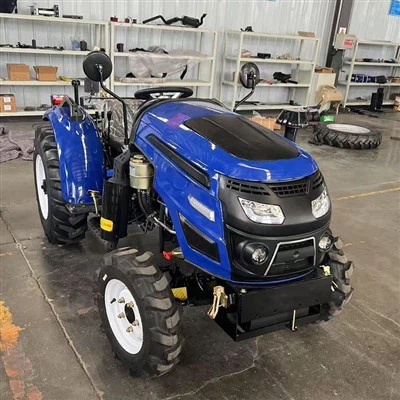
In the agricultural sector, rapid technological advancements are profoundly transforming traditional operations, and the emergence of smart tractors is a key driver of this transformation. Recently, a new smart tractor has been put into operation in multiple farmlands. Its superior performance and advanced technology offer farmers an unprecedented operational experience.
This smart tractor is equipped with a high-precision satellite navigation system, enabling centimeter-level positioning. This ensures extremely high precision during operations, whether plowing, sowing, or fertilizing. Farmers simply input operational parameters such as row spacing, sowing depth, and fertilizer application into the control terminal, and the tractor automatically follows a pre-set path and standards, significantly reducing errors caused by manual operation. For example, traditional sowing methods result in uneven seed spacing, which can affect crop growth and yield. However, smart tractors can minimize seed spacing errors, increasing seed emergence rates by [X]%, laying a solid foundation for healthy crop growth. Furthermore, smart tractors are equipped with intelligent sensors that monitor soil moisture, fertility, crop growth, and other information in real time, automatically adjusting their operations based on this data. If the sensors detect insufficient soil fertility, the tractor automatically increases fertilizer application; if abnormal soil moisture is detected, the irrigation system is promptly adjusted. This feature not only improves resource utilization efficiency and avoids environmental pollution caused by over-fertilization and irrigation, but also allows for precise operation tailored to the specific conditions of each plot, truly achieving "adapting to local conditions.

Furthermore, smart tractors feature remote monitoring and fault diagnosis. Farmers can use a mobile app to monitor the tractor's progress, location, and operating status anytime, anywhere. If a malfunction occurs, the system quickly diagnoses it and issues an alert, prompting maintenance personnel to address it. This effectively reduces delays caused by equipment failure and significantly improves operational efficiency.
Industry experts say that the widespread use of smart tractors will drive agricultural production towards precision, intelligence, and efficiency, and is a key step towards agricultural modernization. As technology continues to mature and costs gradually decrease, smart tractors are expected to become the main force in agricultural production in the future and contribute to ensuring global food security.